If you are a foreign founder who owns a US LLC, there is one IRS filing that can create a serious financial issue if it is missed. That filing is Form 5472. The penalty for missing it is $25,000 per year, per LLC. Many international founders only hear about it after the deadline has already passed, which is when the penalty process begins.
I am James Baker, a Licensed CPA based in Miami, Florida, and for the past fifteen years, I have focused on compliance for foreign-owned US LLCs. Through my firm, James Baker & Associates, I have supported thousands of international founders in staying compliant and dealing with IRS requirements in a structured way. I have also helped clients address past filings where penalties had already been issued. Below is a clear explanation of how Form 5472 works, who must file it, and how I guide clients to avoid costly mistakes.
What Form 5472 Is and Why the IRS Requires It
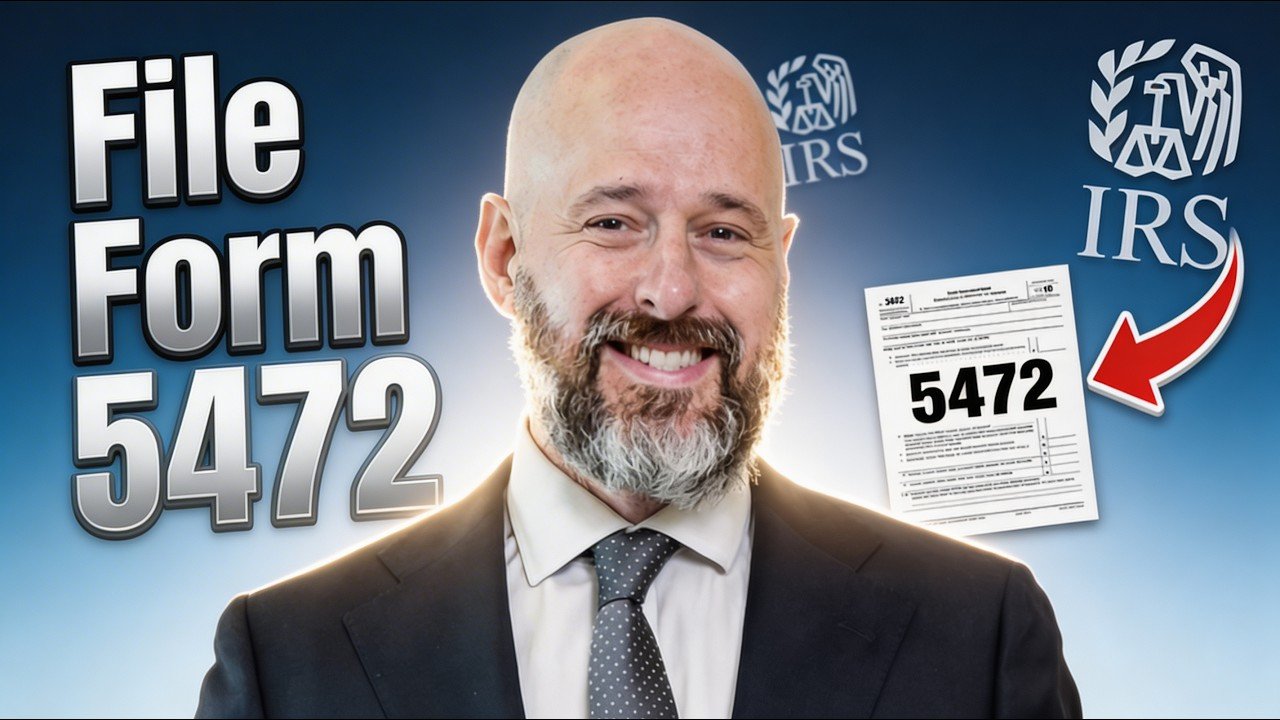
Form 5472 is an IRS information return required for any US corporation or US LLC treated as a corporation that is 25 percent or more owned by a non-resident, when there are reportable transactions between the company and its foreign owner.
In simple terms, if you are a non-US person and you own a US LLC, and there has been any financial movement between you and the LLC during the year, you will most likely need to file Form 5472.
The purpose of this form is to give the IRS visibility into transactions between US entities and foreign owners. It is not a tax payment form. Submitting it does not automatically mean you owe US tax. However, not filing it can result in a $25,000 penalty per form, per year, even if no tax was due.
Why Many Foreign Founders Miss This Requirement
In practice, there are three common reasons this form is missed.
First, the rule changed in 2017 to include single-member foreign-owned LLCs. Many online articles and outdated resources still reflect older rules, which leads to confusion and missed filings.
Second, most LLC formation services do not explain ongoing IRS filing obligations. They handle company setup, but compliance responsibilities are left to the owner. As a result, many founders only become aware of Form 5472 after the deadline has passed.
Third, Form 5472 must be filed together with a pro forma Form 1120, even when the LLC has no US tax liability. This is where many misunderstandings occur. Although LLCs are often described as pass-through entities, foreign-owned single-member LLCs are treated differently for this specific reporting requirement.
Who Needs to File Form 5472
In my practice, I use a simple rule when advising clients: if a non-resident owns 25 percent or more of a US LLC, and there has been any financial transaction between the owner and the LLC, Form 5472 is generally required.
“Financial transaction” is interpreted broadly. It may include:
• Capital contributions from the foreign owner into the LLC
• Distributions from the LLC to the foreign owner
• Loans in either direction
• Loan repayments
• Payments for services between the owner and the LLC
• Rent, royalties, or licensing payments
• Reimbursements in many cases
Even a small initial funding transfer to start the LLC is usually enough to create a reporting requirement.
How the $25,000 Penalty Works
The penalty is $25,000 per form, per year.
For example, if you own three foreign-owned US LLCs and missed Form 5472 for two years, the potential penalty exposure can reach $150,000 before any tax calculation is even considered.
The IRS applies this penalty regardless of business performance. It does not matter whether the company made a profit or operated at a loss. I have seen cases where penalties were issued even when the business had minimal or no revenue.
How I Help Clients Stay Compliant
Compliance for foreign-owned LLCs becomes manageable when it is structured correctly from the beginning. At James Baker & Associates, I follow a consistent process for international clients.
Step 1: Setting Up a Compliance Schedule
Once your LLC is formed, I will create a filing calendar that includes all federal and state deadlines. For most foreign-owned single-member LLCs, the key federal deadline is April 15 (or June 15 if an extension applies), covering Form 5472 and the pro forma Form 1120.
You do not need to track deadlines yourself. I send reminders well in advance so filings are not missed.
Step 2: Preparing Form 5472 and Form 1120 Together
These forms must be submitted together as a package. I prepare both based on your financial records and ensure all reportable transactions are correctly classified.
The filing is typically submitted by mail or fax to the IRS unit handling these forms, as electronic filing is not available for this specific submission type.
Step 3: Maintaining Proper Transaction Records
The IRS expects clear documentation of all financial activity between you and your LLC. I help clients maintain structured bookkeeping so that capital contributions, distributions, and internal payments are recorded accurately.
This is not only for compliance purposes but also serves as protection in the event of an IRS review.
Step 4: Handling IRS Notices or Reviews
If your LLC receives any IRS correspondence, you can forward it to me for a response. Most automated notices can be addressed efficiently when handled by a CPA already familiar with your filing history.
If You Have Already Missed Form 5472
A common situation I see is founders discovering Form 5472 requirements years after forming their LLC. In some cases, filings are two, three, or even five years overdue.
While the penalties can appear significant, there are formal relief options in certain situations.
The IRS may consider reasonable-cause relief where non-compliance was not intentional. There is also a delinquent international information return submission process that may apply, depending on the facts of the case.
I have worked with clients to reduce or remove penalties by preparing detailed, reasonable-cause statements supported by documentation. The quality and accuracy of the submission are critical. A weak explanation can make resolution more difficult.
If you are in this situation, it is important not to delay. Earlier action generally allows for more options to be considered.
Frequently Asked Questions
Do I have to file Form 5472 if my LLC made no income?
Yes, in most cases. The requirement is based on reportable transactions, not profit. Even transferring startup capital into the LLC can trigger a filing.
My LLC is a single-member LLC. Do I still need to file?
Yes, if it is foreign-owned. For US tax classification, single-member LLCs are generally disregarded entities. However, for Form 5472 purposes, they are treated as corporations and must file both Form 5472 and a pro forma Form 1120.
When is Form 5472 due?
It is due with Form 1120, typically April 15 for calendar-year entities. Extensions may apply if filed on time.
Can I file Form 5472 myself?
It is possible, but the form requires precise reporting of transactions and must be filed in a specific format by mail or fax. Errors can result in a $25,000 penalty, so many founders prefer professional preparation.
What if I am not sure whether I need to file?
If you are a foreign owner of a US LLC and there has been any financial movement between you and the business, it is safer to assume that filing is required unless a CPA has reviewed your situation. You can schedule a consultation at jamesbakercpa.com for a clear assessment.