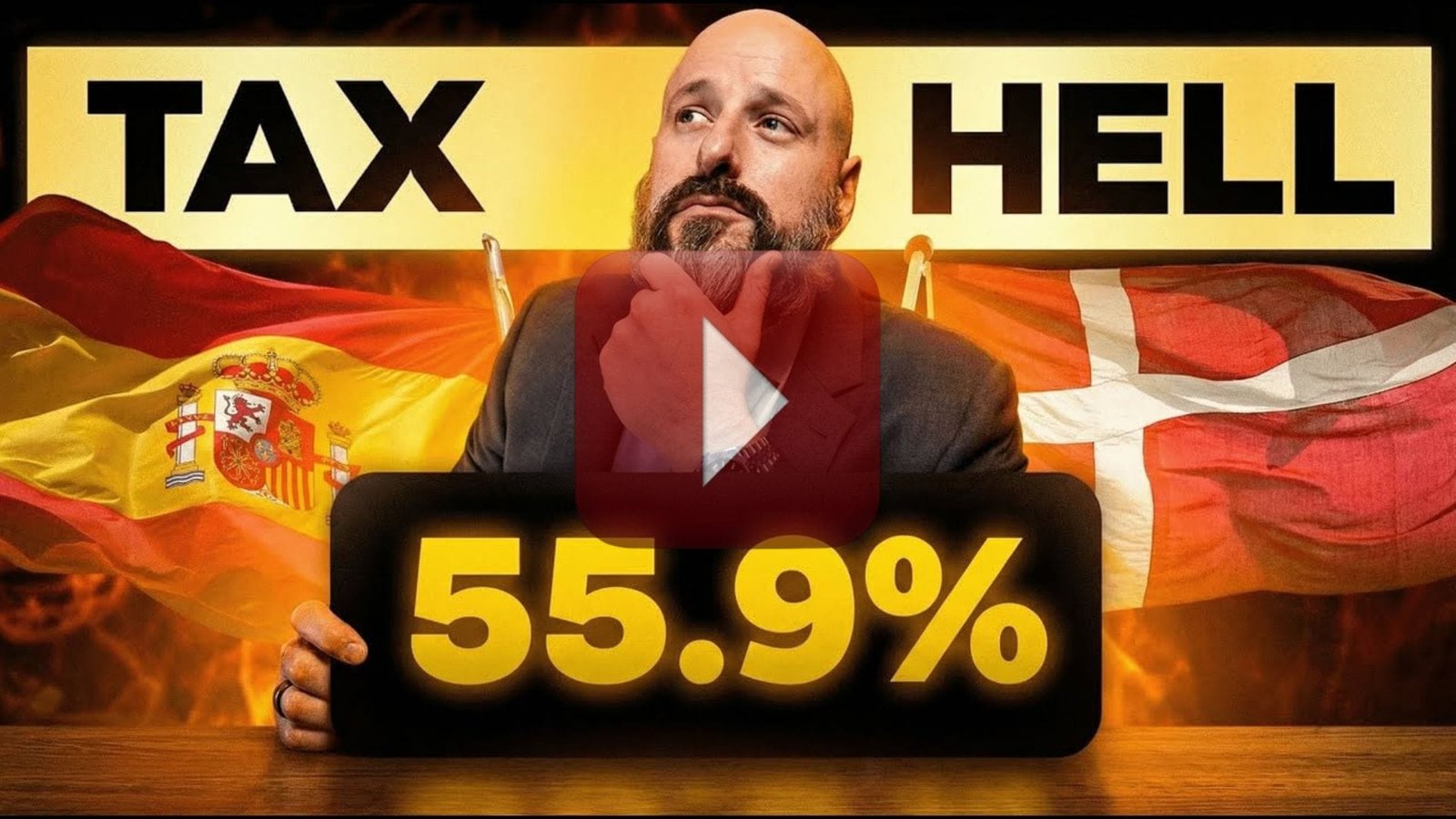
If you live in the European Union, you already know how heavy the tax burden can be. Countries like Spain, France, Germany, Italy, and the UK regularly impose income tax rates between 40 percent and 55 percent on professionals and business owners.
Many people believe the only way out is moving to Dubai and completely abandoning Europe. That is not the only legal option.
There are strategies that allow you to spend time in Europe, maintain a high quality of life, and still drastically reduce or even eliminate your tax bill. The key is understanding how tax residency works and structuring your income properly.
This article explains how to legally stop paying taxes in the EU by combining tax residency planning with offshore business structures.
Tax Residency Is More Important Than Citizenship
When people ask how to legally stop paying taxes in the EU, they often assume nationality determines where taxes are owed. In reality, tax residency matters far more than your passport.
Most EU countries determine tax residency using several criteria. These usually include time spent in the country, your center of vital interests, family ties, property ownership, and where your business is managed.
The well known 183-day rule is only part of the equation. Staying under that threshold does not automatically remove you from the tax system.
If you still own a home, keep your children in school, manage your business locally, or maintain most of your financial accounts in the same country, you can still be taxed there.
To legally stop paying taxes in the EU, you must change your tax residency, not just your travel pattern.
Understanding the Center of Vital Interests
European tax authorities look closely at what they call your center of vital interests. This refers to where your personal and economic life is truly based.
They examine factors such as:
- where you spend most of the year
- where your family lives
- where your social and professional life exists
- where your business decisions are made
- where your main bank accounts are held
To reduce EU taxes legally, you must build a stronger connection to a new country and weaken your connection to your old one. This means creating real substance in another jurisdiction instead of relying only on paperwork.
That usually involves obtaining residency, signing a lease or buying property, opening local bank accounts, registering an address, and documenting your presence.
This is not about hiding income. It is about relocating your life in a way that tax authorities recognize as legitimate.
Choosing a Low Tax Residency Country
Not all countries tax income the same way. Some use territorial tax systems, others apply flat taxes, and some offer special regimes for foreign residents.
Popular low tax residency options often include:
- Paraguay
- Panama
- Georgia
- United Arab Emirates
- selected Caribbean jurisdictions
In territorial systems, only local income is taxed. Foreign sourced income is usually exempt.
This allows Europeans to relocate their tax residency while continuing to operate international businesses without paying high domestic tax rates.
The right country must meet several conditions. It must have low taxes, offer accessible residency programs, recognize you as a tax resident, and match your lifestyle preferences.
This approach is legal relocation, not tax evasion.
Why Business Structure Matters
Once tax residency is changed, the next critical step is structuring your business income correctly. This is where most strategies fail.
If you are European and operate as a consultant, digital service provider, or remote professional, you do not necessarily need a European company.
You can use a US LLC instead.
A US LLC owned by a non resident can open US bank accounts, use payment processors like Stripe, invoice international clients, and operate globally. When structured correctly, it can be tax neutral.
If you perform no work in the United States, have no US office, employ no US staff, and are not a US resident, that company can generate income without US federal income tax.
This structure allows Europeans to run international businesses while avoiding EU corporate tax and EU personal income tax when residency has been moved properly.
Combining Residency and Business Strategy
The real power comes from combining a low tax residency with an offshore business structure.
A typical example works like this:
- You become a resident of a low tax country such as Paraguay.
- You operate your business through a US LLC.
- Clients pay your US company.
- You manage everything remotely.
Because Paraguay does not tax foreign income and the United States does not tax non resident owned LLC income under the right conditions
All that and also you are no longer an EU tax resident, your effective tax rate can be close to zero.
This is why understanding how to legally stop paying taxes in the EU requires planning both personal residency and business income together.
Why Partial Moves Usually Fail
Many people attempt half measures.
They keep an apartment in Spain, leave family in Germany, spend most of the year in France, and register residency somewhere else.
Tax authorities focus on substance rather than formal declarations. If your real life remains in the EU, your tax obligation usually remains there too.
To succeed, you must actually live elsewhere, build real connections, and reduce your presence in your former country.
Strong planning is documented planning. This provides protection if your situation is ever reviewed.
The Financial Impact Over Time
Consider a consultant earning two hundred thousand euros per year and paying forty percent in tax.
That results in eighty thousand euros per year paid to the tax authority.
Over ten years, that becomes eight hundred thousand euros.
That capital could be used for property, investments, business growth, or family security. Over time, the opportunity cost of staying in a high tax system becomes enormous.
Who This Strategy Works For
This approach works best for people whose income is location independent. That includes consultants, coaches, agency owners, digital professionals, and online business operators.
It does not work well for employees with fixed locations or businesses tied to physical storefronts.
If your income is mobile, your tax strategy can also be mobile.
Why the United States Is a Key Tool
The United States is unique because it does not participate in CRS, has strong banking infrastructure, offers clear corporate law, and allows foreign owned companies to operate internationally.
For non residents, the US is one of the most effective jurisdictions for running a global business while maintaining compliance.
This is why many Europeans choose US LLCs instead of EU companies.
Final Thoughts
Learning how to legally stop paying taxes in the EU is not about tricks or shortcuts.
It requires changing residency, choosing the right country, structuring business income correctly, and staying compliant.
It takes planning, documentation, and execution. When done properly, it works.
We help with US LLC formation, banking setup, compliance, and international tax strategy.
Everything legal. Everything structured. No guessing.